Skip to content
“From Creation to Salvation: Explore the Bible”

A guided timeline and Bible study to understand Jesus’ life and message.

Copyright © 2026 Jesus Christ is KING | Powered by PMC

Joseph

Joseph is Jacob’s favored son — The “coat of many colors” (or richly ornamented robe) symbolized status, marking Joseph as the heir over his older brothers.
Sibling jealousy drives the story — Joseph’s dreams of ruling over his family intensify the brothers’ resentment, setting the conflict in motion.
Thrown into a pit — The empty cistern symbolizes Joseph’s sudden fall from privilege to vulnerability.
Reuben tries to save him — The oldest brother secretly plans to rescue Joseph later, showing not all the brothers agreed with the plot.
Sold for twenty pieces of silver — This was the standard price for a young slave in the ancient Near East, grounding the story in real historical practice.
Ishmaelites/Midianites caravan — Traders traveling between Gilead and Egypt, reflecting the active trade routes of the time.
Egypt as a place of opportunity and danger — Being sold into Egypt sets up Joseph’s rise to power and Israel’s future migration.
The brothers deceive Jacob — Using Joseph’s robe dipped in goat’s blood, echoing Jacob’s own earlier deception of Isaac.
Joseph’s suffering becomes the path to salvation — His hardship ultimately positions him to save his family during famine.
A major turning point in Genesis — Joseph’s sale begins the chain of events leading Israel from Canaan to Egypt, setting the stage for Exodus.

Job

Job is introduced as “blameless and upright” — This doesn’t mean sinless; it means a person of integrity who genuinely seeks to honor God.
“Fears God and shuns evil” — A Hebrew expression describing deep reverence, humility, and moral wisdom.
Job is not an Israelite — The story takes place outside Israel’s history, showing that God’s relationship with humanity extends beyond one nation.
Set in the land of Uz — A region likely east or southeast of Israel, emphasizing Job’s foreign, universal character.
Job is extremely wealthy — His livestock numbers reflect ancient measures of status; he is a leader, not a hermit.
The book begins like a wisdom story — Job is introduced the same way ancient sages were: by character, not genealogy.
Job’s righteousness is the foundation of the story — His suffering is not punishment; the narrative challenges the idea that good things always happen to good people.
A cosmic perspective — Job’s story will soon shift from earth to heaven, showing that human suffering can have unseen dimensions.
Job’s name may mean “Where is the father?” or “Persecuted one” — Both meanings foreshadow the themes of questioning and suffering.
Job is a model of faith under pressure — His story explores the deepest questions of justice, suffering, and God’s character.

God’s Covenant

“Go from your country” — God calls Abram to leave everything familiar: land, family, and security. Ancient people rarely moved far from home, making this a radical act of trust.
A threefold promise — God promises land, descendants, and blessing, forming the foundation of the entire biblical story.
“I will make you a great nation” — Despite Sarai’s barrenness, God promises a future family that only He can bring about.
Blessing vs. curse — God ties Himself to Abram: those who bless Abram are blessed; those who oppose him oppose God’s plan.
“All families of the earth will be blessed” — The covenant is global in scope; Abram is chosen not for privilege but for mission.
A reversal of Babel — At Babel, nations scatter in confusion; through Abram, God begins a plan to restore and reunite humanity.
Abram’s obedience — He responds without knowing the destination, showing faith that becomes a model throughout Scripture.
The covenant is unconditional — God says “I will” repeatedly, emphasizing His initiative and faithfulness.
A new beginning — Just as Noah was a “new Adam,” Abram becomes the beginning of a new people shaped by God’s promise.
The covenant echoes through the Bible — It becomes the backbone of Israel’s identity and is fulfilled ultimately through Jesus.

Abraham

Terah’s three sons — Abram, Nahor, and Haran are introduced together, signaling a major shift in the biblical story from universal history to one family.
Abram’s name means “exalted father” — Later changed to Abraham, “father of many,” reflecting God’s promise.
A turning point in Genesis — With Abram, the narrative moves from global events (Creation, Flood, Babel) to God’s plan through one chosen family.
The family lived in Ur — A major Mesopotamian city known for advanced culture, trade, and ziggurats; Abram came from a sophisticated urban world.
Terah begins the journey — It’s Terah, not Abram, who first sets out toward Canaan, showing the family was already moving toward God’s future plan.
Haran dies early — This tragedy shapes the family dynamics and sets up Lot’s importance in Abram’s story.
Sarai is barren — Introduced immediately to highlight that God’s promises will require divine intervention, not human ability.
Migration to Haran — The family stops halfway to Canaan, a pause that sets the stage for God’s direct call to Abram in the next chapter.
Abram is 75 when called — His story begins late in life, emphasizing that God’s timing doesn’t follow human expectations.
From many nations to one man — After the scattering at Babel, God begins His restoration plan through a single faithful family.

Tower of Babel — Quick Insights

One language, one people — The story highlights human unity, but unity used for pride and self‑exaltation rather than good.
“Make a name for ourselves” — In the ancient world, this meant seeking fame, power, and independence from God.
A tower “to the heavens” — Likely a ziggurat, a Mesopotamian temple tower meant to connect earth and the divine realm.
God “comes down” — A literary irony: the tower meant to reach heaven is so small that God must “come down” to see it.
Confusing the languages — God disrupts prideful ambition by breaking their ability to coordinate rebellion.
Scattering the people — Humanity spreads across the earth, fulfilling God’s original command to “fill the earth.”
“Babel” wordplay — In Hebrew, balal means “to confuse” or “mix,” creating a pun with the city’s name.
Babylon connection — Babel is the Hebrew name for Babylon, a future symbol of human arrogance and empire.
Not punishment, but protection — God prevents humanity from uniting around destructive pride.
Reversal at Pentecost — In Acts 2, languages unite people again — but this time around God’s purpose, not human pride.

Noah’s Flood — Quick Insights

“Violence filled the earth” — The Hebrew word ḥamas means corruption, injustice, and moral decay, not just physical violence.
Noah’s name means “rest” — His story is about God bringing relief to a world in chaos.
The ark was a box, not a ship — The Hebrew tevah means “chest,” the same word used for Moses’ basket.
“Fountains of the deep” — Ancient readers saw this as creation reversing back into chaos.
Mountains covered — Ancient flood accounts use hyperbole to emphasize total destruction, not geography.
Seven pairs of clean animals — Needed for sacrifices after the flood without risking extinction.
The dove and olive leaf — A symbol of peace, renewal, and God’s mercy returning to the world.
The rainbow as a war bow — In Hebrew, it’s the same word as a warrior’s bow; God “hangs up His weapon.”
Global or local flood? — “Whole earth” often meant the whole known world; the message is theological, not geological.
Flood stories in many cultures — Over 200 cultures have flood traditions; Genesis gives a unique message of mercy.
Noah as a “new Adam” — He steps onto dry land, receives a blessing, and begins a new humanity.
God “remembers” Noah — In Hebrew, “remember” means God takes action to rescue.
Why 40 days? — The number symbolizes testing, transition, and renewal throughout Scripture.
Ark dimensions show stability — The proportions match the ideal ratio for surviving rough waters.
God shuts the door — Emphasizes God’s protection and control over salvation.

Genesis 1–3 — Quick Insights

“Dust of the ground” — In Hebrew, ʿafar symbolizes humility, mortality, and dependence on God, not worthlessness.
God’s breath of life — The word ruach means breath, wind, and spirit; it’s the same word used for God’s Spirit in creation.
Adam & Adamah wordplay — “Adam” means human; “adamah” means ground. The story highlights humans as earth‑formed yet God‑breathed.
Eden as a temple — Eden mirrors later temples: God walks there, a sacred center exists, rivers flow out, and precious stones are mentioned.
“Helper suitable” — The Hebrew ezer is used for God as a rescuer; it means strong ally, not assistant or subordinate.
Eve from Adam’s “side” — The word ṣēlāʿ means side, not rib, suggesting two halves of one whole rather than hierarchy.
The serpent’s symbolism — In the ancient Near East, serpents represented wisdom, chaos, immortality, and rebellion.
The Tree of Life — A symbol of God’s life‑giving presence; it reappears in Proverbs and Revelation.
The forbidden fruit wasn’t an apple — The apple idea came from a Latin pun (malum = apple / evil); the Bible never names the fruit.
“Knowing good and evil” — This phrase means claiming moral autonomy — deciding right and wrong independently of God.
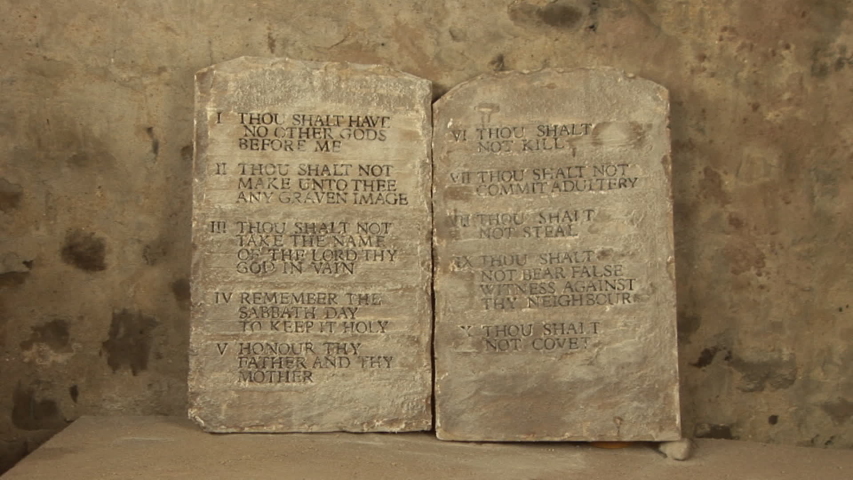
10commandments popup

The 10 Commandments

  1. You shall have no other gods before Me
  2. You shall not make idols
  3. You shall not misuse the name of God
  4. Remember the Sabbath day and keep it holy
  5. Honor your father and mother
  6. You shall not murder
  7. You shall not commit adultery
  8. You shall not steal
  9. You shall not bear false witness (lie)
  10. You shall not covet