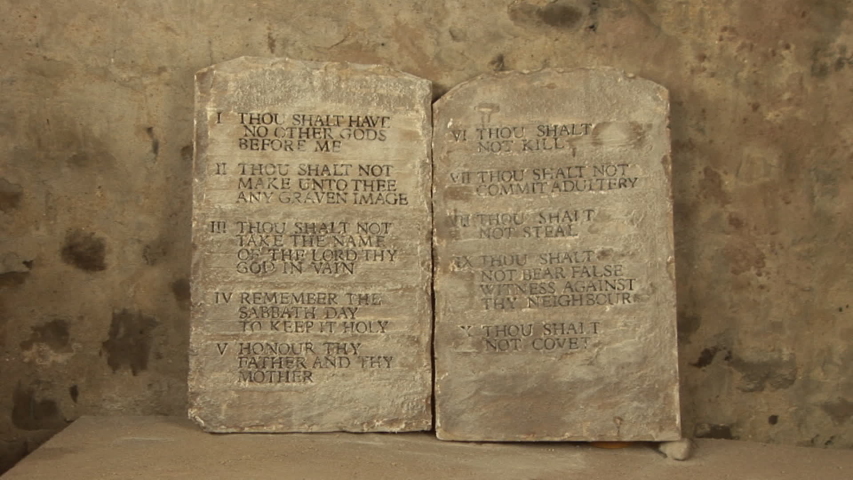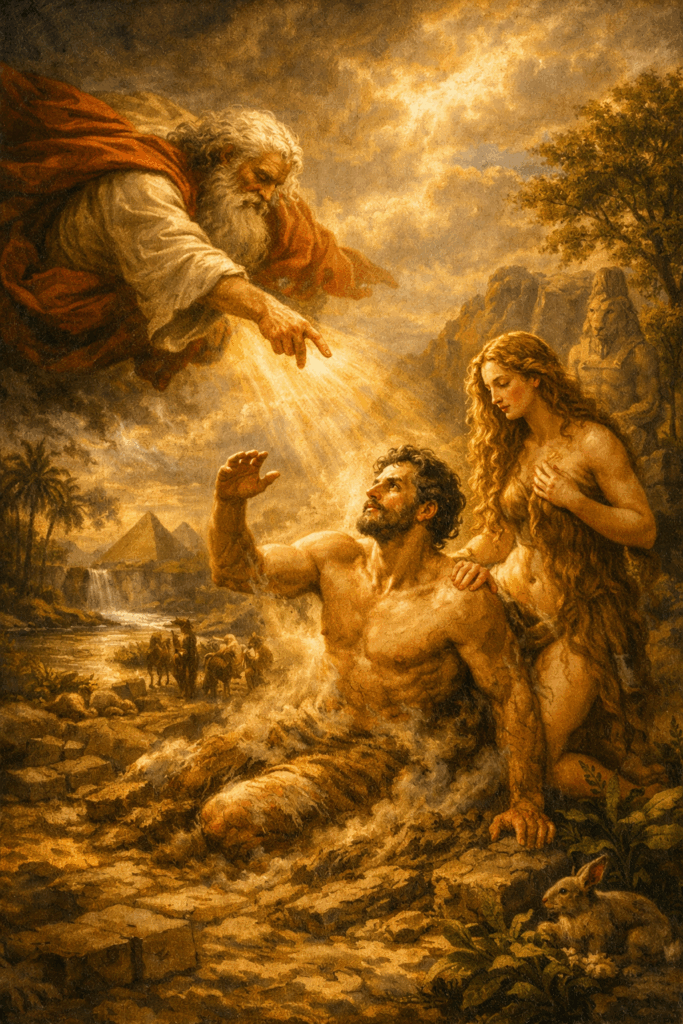
God forms Adam from the dust of the ground and breathes life into him, placing him in the Garden of Eden to tend and keep it. Seeing that Adam is alone, God creates Eve from Adam’s side, establishing companionship and the first human relationship. Together, Adam and Eve live in harmony with God and creation, reflecting innocence, purpose, and unity.
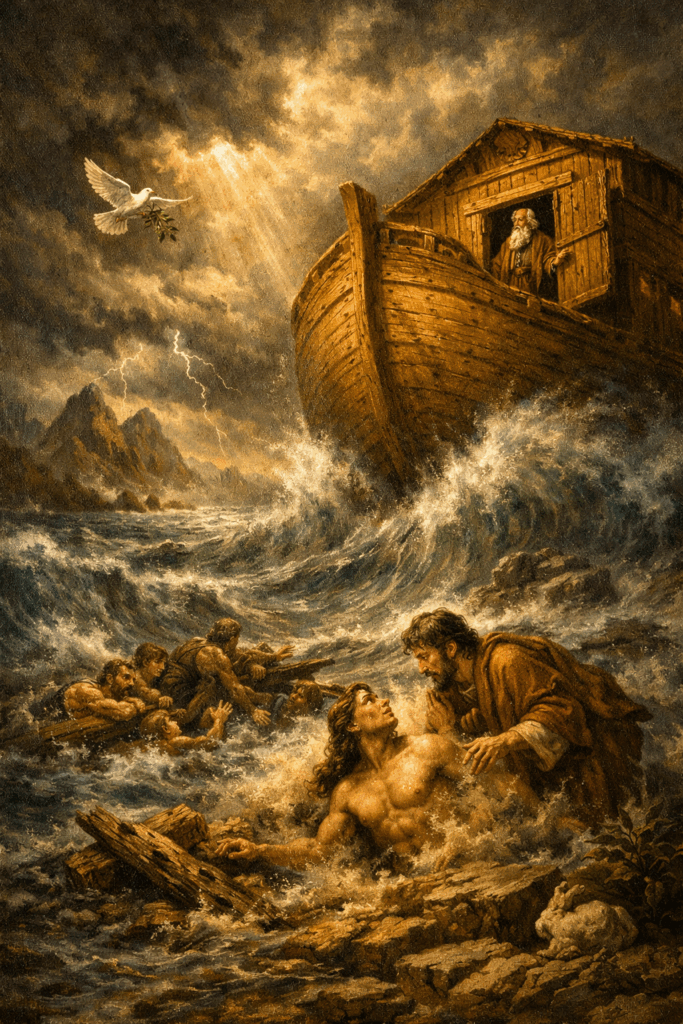
God sees that human wickedness has spread across the earth and decides to send a great flood to cleanse it. However, Noah is considered righteous, so God instructs him to enter the ark he has built, bringing his family and pairs of animals (and more of certain clean animals).
Once they are inside, God shuts the door of the ark. Rain begins to fall for 40 days and 40 nights, and water also rises from beneath the earth. The floodwaters grow so deep that they cover even the highest mountains. All living things outside the ark perish.
Only Noah, his family, and the animals with them survive, safely carried above the waters in the ark.
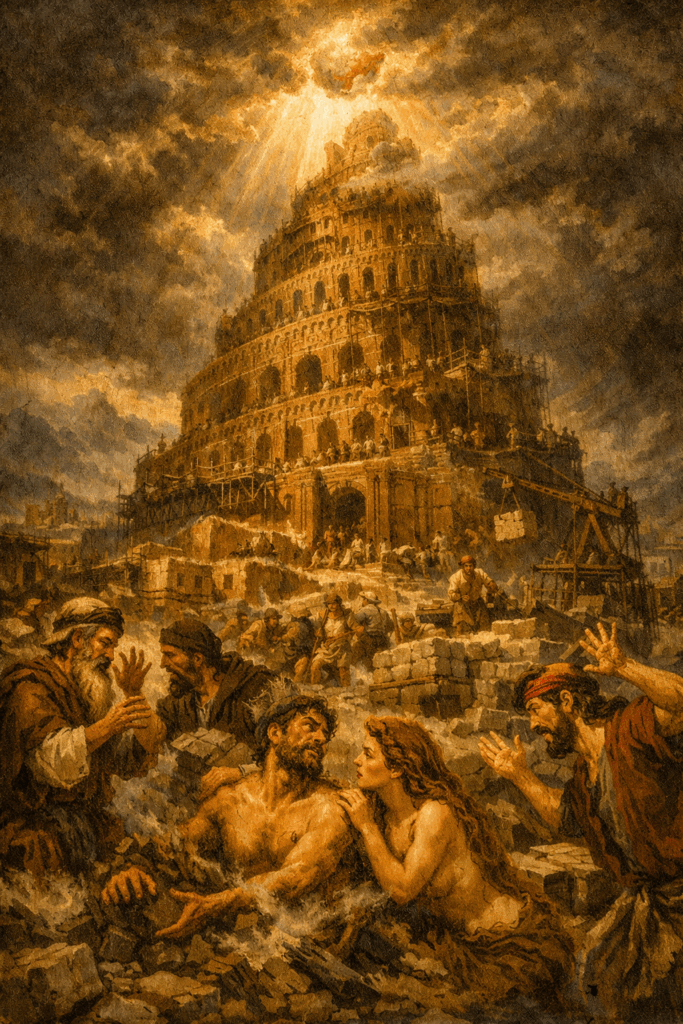
After the flood, all people spoke one language and settled together. They decided to build a great city with a tall tower reaching toward the heavens to make a name for themselves. God saw this and, concerned by their unity in pride, confused their language so they could no longer understand each other. As a result, they stopped building the city and were scattered across the earth.
The place was called Babel, because there God “mixed up” the languages of the world.
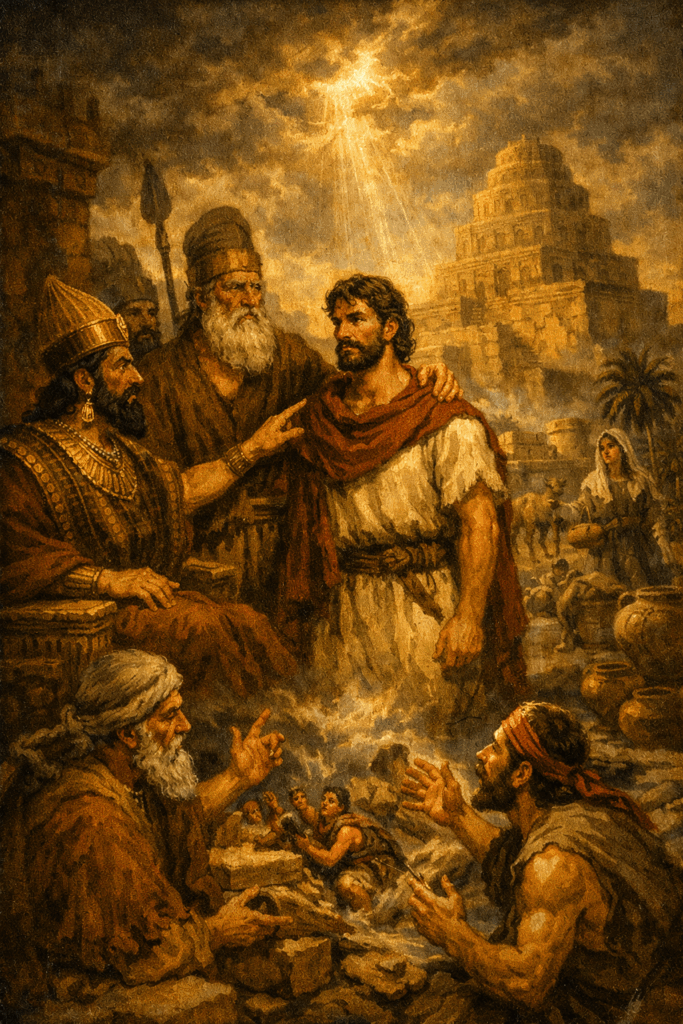
Abraham is introduced as the son of Terah and part of a family line descending from Shem. At this point, there are no major events yet—he is simply named within his genealogy, along with his brothers Nahor and Haran. This marks the beginning of his story, which later becomes central in the Bible.

God calls Abram to leave his homeland and go to a land He will show him. In return, God promises to make him into a great nation, bless him, make his name great, and bless all peoples on earth through him. This marks the beginning of a special relationship between God and Abraham.
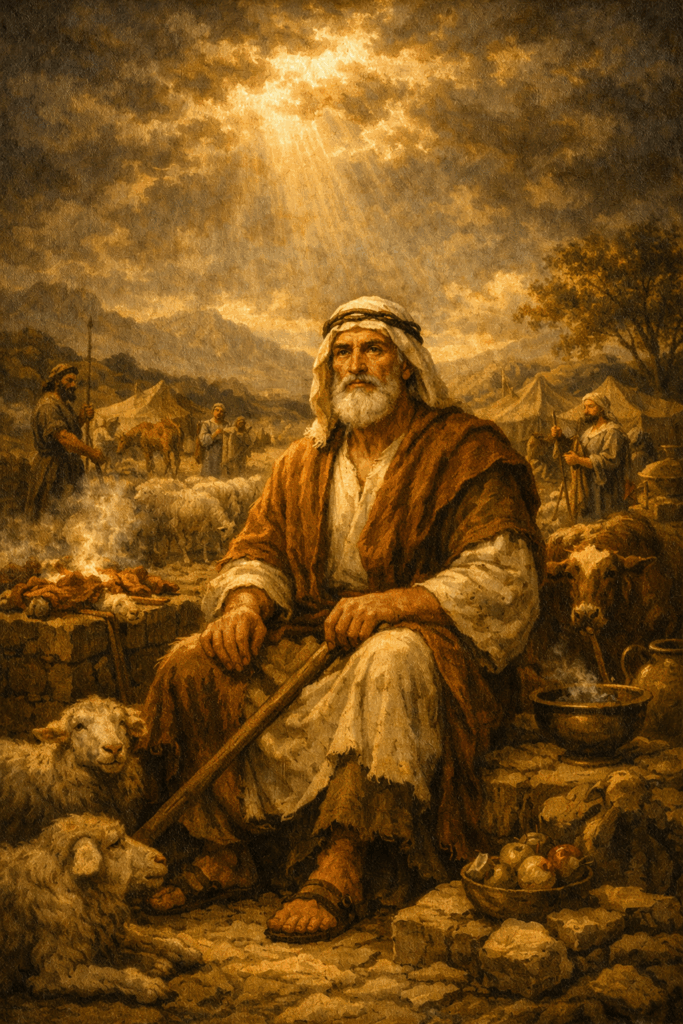
Job is introduced in the Book of Job as a righteous and faithful man who lived in the land of Uz. Known for his integrity and devotion to God, Job is tested through intense suffering, losing his wealth, family, and health. Despite his trials, his story explores themes of faith, perseverance, and trust in God’s wisdom.
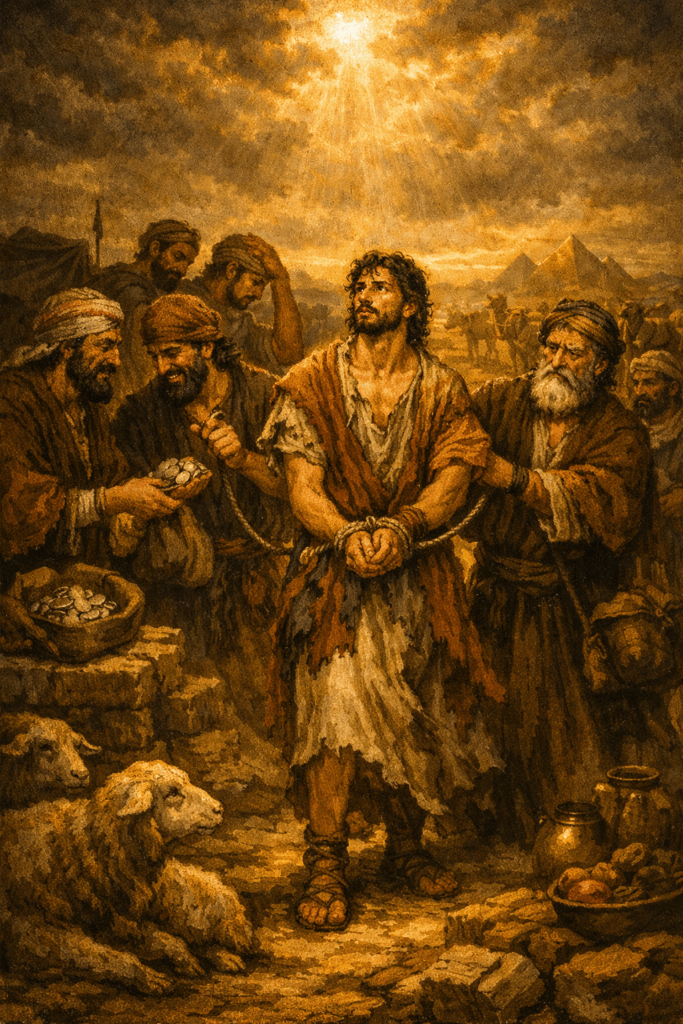
Joseph, the favored son of Jacob, was betrayed by his jealous brothers and sold into slavery. As recorded in the Book of Genesis (Genesis 37), he was taken to Egypt by traveling merchants. This event marks a major turning point in his life, setting the stage for his eventual rise to power and God’s plan to preserve his family during a future famine.
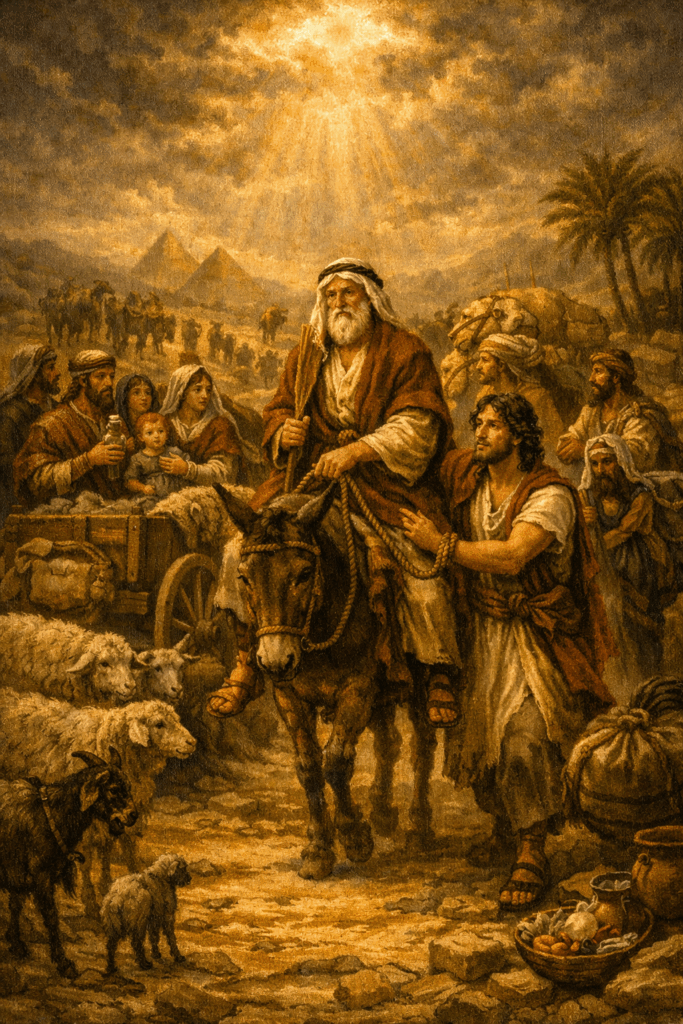
Jacob, also called Israel, moved his entire family to Egypt during a severe famine, as recorded in the Book of Genesis (Genesis 46). Reunited with his son Joseph, who had risen to power there, Jacob settled in the land of Goshen. This moment marks the beginning of Israel’s presence in Egypt and the growth of the nation that would later play a central role in biblical history.
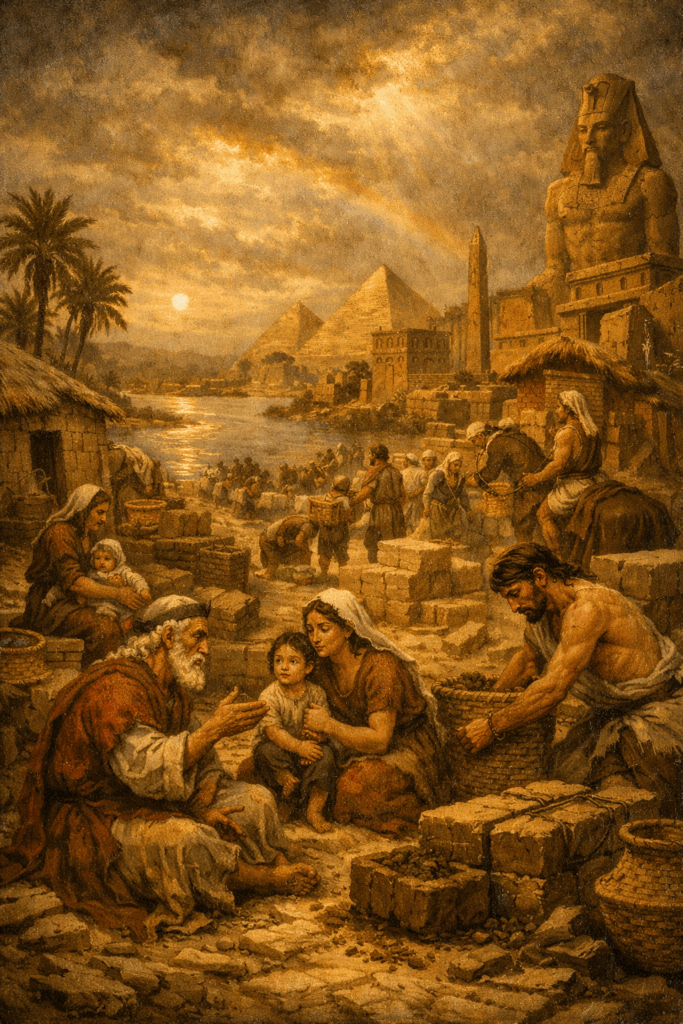
This period marks the time from when Jacob and his family settled there until God prepared to deliver them from slavery. It highlights the growth of the nation of Israel and sets the stage for the Exodus and their journey to freedom.
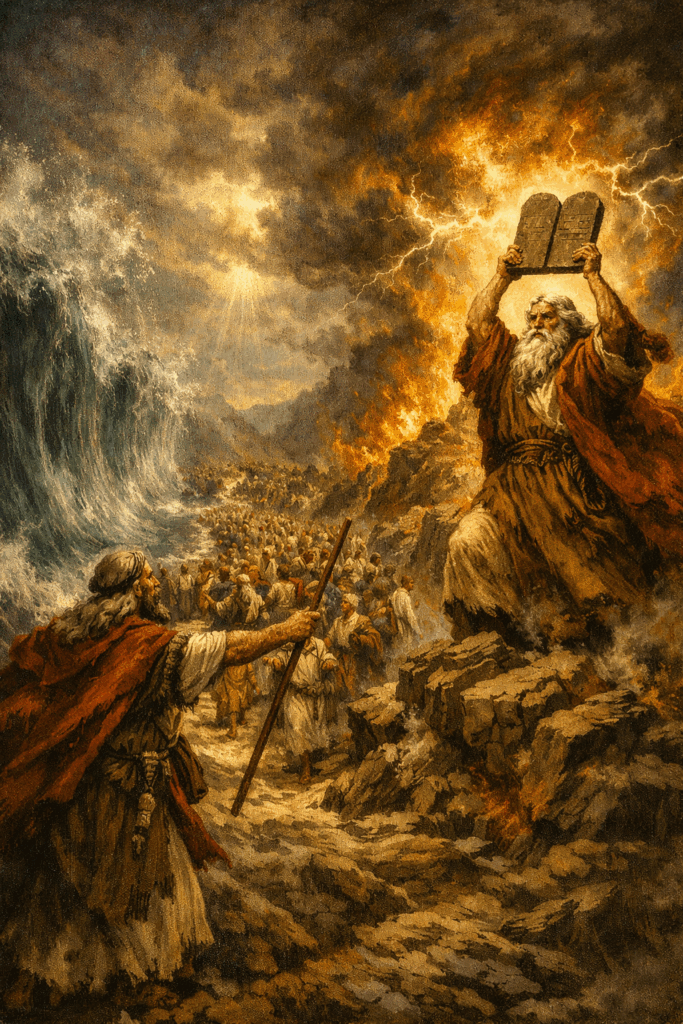
In the Book of Exodus, God delivers the Israelites from slavery in Egypt, leading them out under the guidance of Moses. They miraculously cross the Red Sea, escaping Pharaoh’s army and beginning their journey toward freedom. In Exodus 20, God establishes His covenant with them by giving the Ten Commandments on Mount Sinai, providing laws to guide them as His chosen people.
At Kadesh‑barnea, on the southern border of the Promised Land, Israel lost courage after hearing the spies’ fearful report. The people refused to advance, accusing God of bringing them out of Egypt only to die in battle. This rebellion marked a turning point: God sentenced that generation to wander in the wilderness for forty years until a new generation would rise to enter the land.
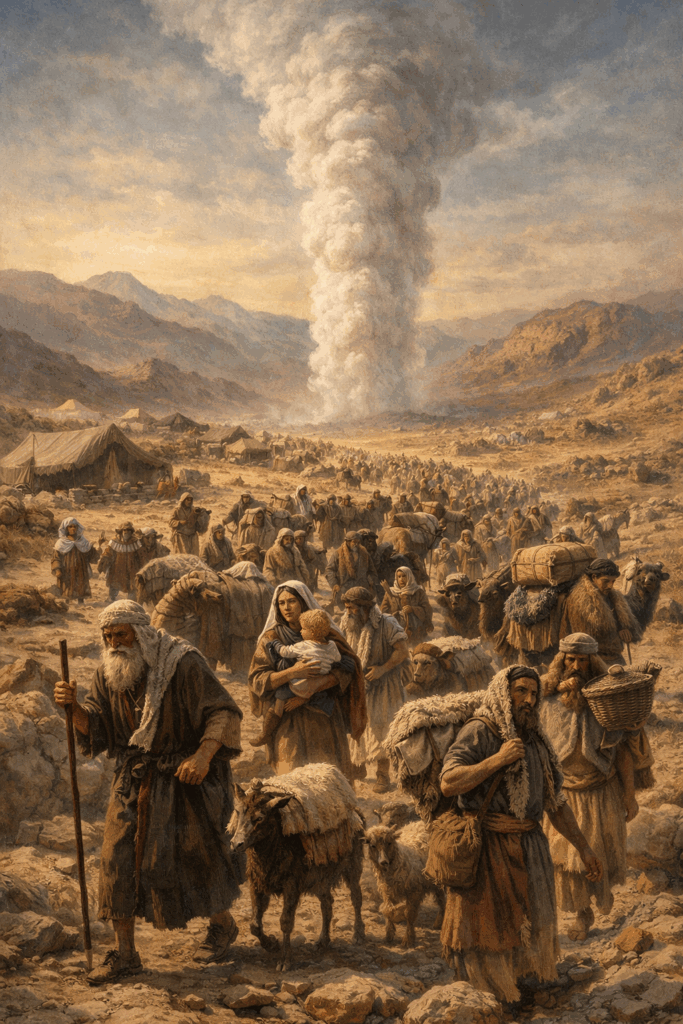
After refusing to enter Canaan at Kadesh‑barnea, the Israelites were sentenced to wander in the wilderness for forty years. This period allowed the unbelieving generation to pass away while a new generation grew up, trained to trust God and prepared to enter the Promised Land. The wandering shaped Israel’s identity, teaching dependence on God through manna, guidance by the pillar of cloud and fire, and the giving of the Law.
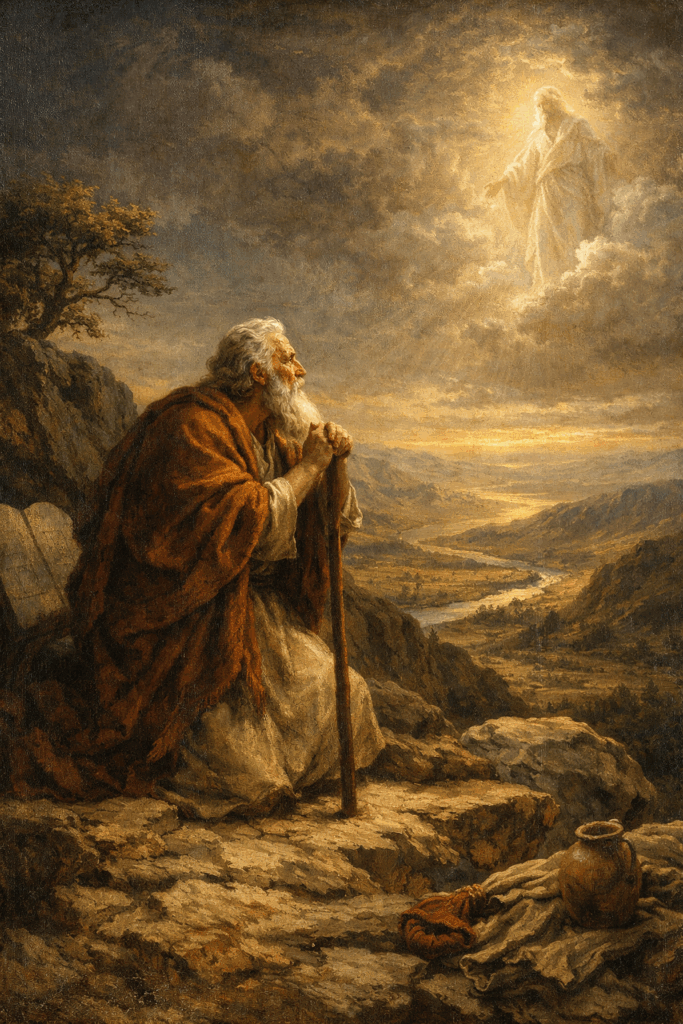
Moses ascends Mount Nebo, views the Promised Land, and dies according to the word of the Lord. God Himself buries him, and Israel mourns thirty days. Leadership passes to Joshua, marking the end of the Exodus generation.
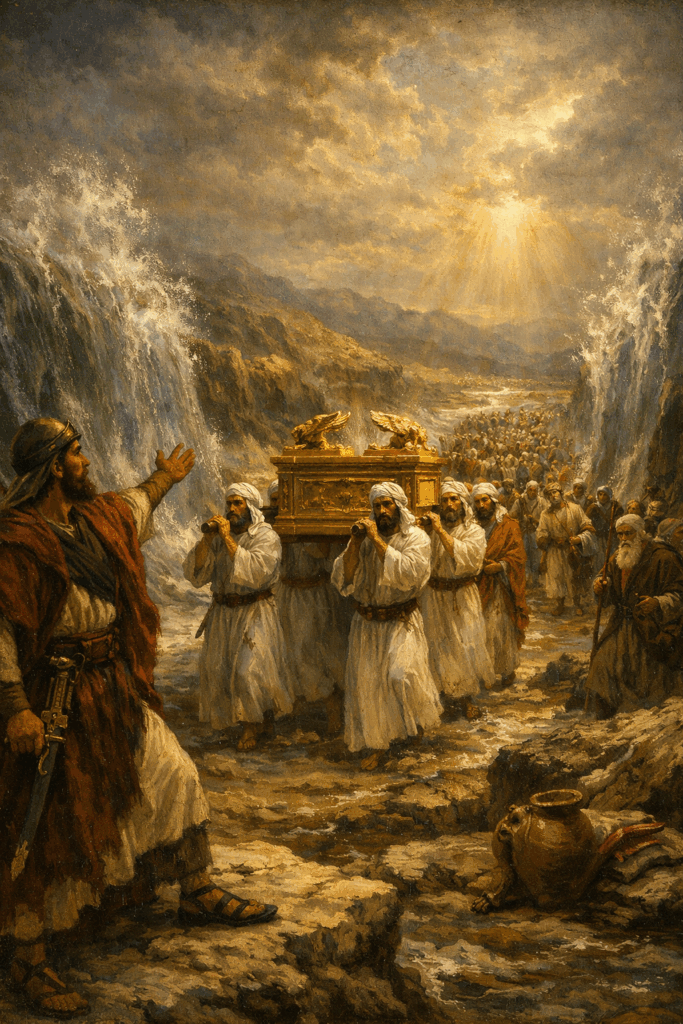
Joshua leads Israel across the Jordan, into the Promised Land. Conquering Jericho, Ai, and the northern and southern coalitions. The land is subdued, and the tribes receive their allotted territories, fulfilling God’s promise to Abraham. The tribes receive their inheritance, and Joshua renews the covenant at Shechem.
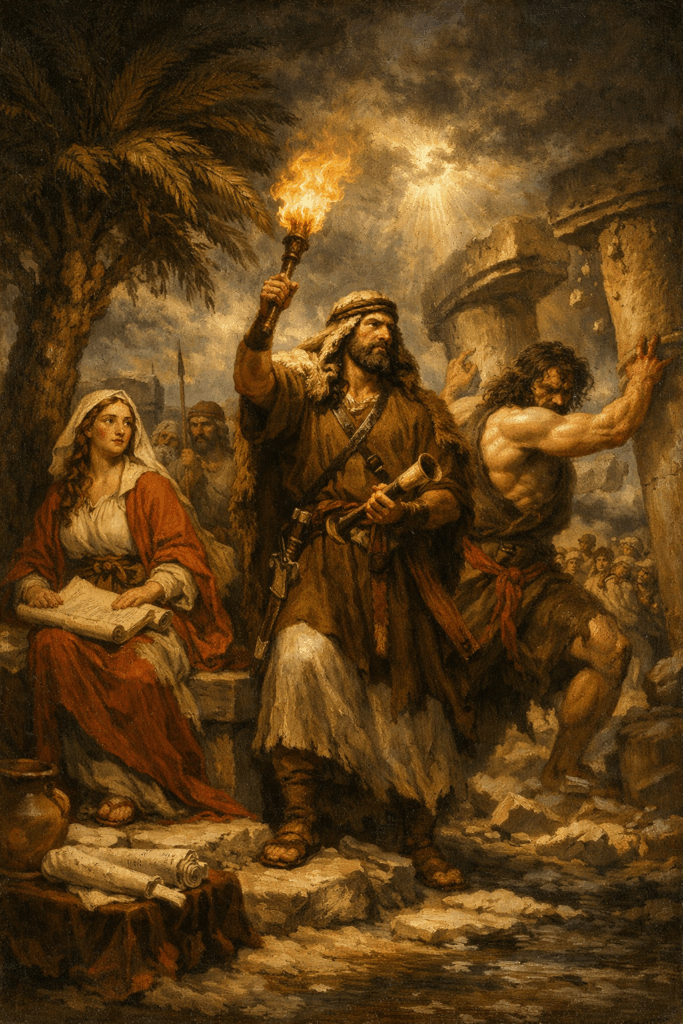
After Joshua’s death, Israel enters a turbulent era of rebellion and deliverance. Without a king, the people repeatedly fall into idolatry, are oppressed by neighboring nations, and cry out to God for rescue. He raises judges like Deborah, Gideon, and Samson to deliver them. The book of Ruth, set in this period, shows God’s quiet faithfulness amid national chaos.
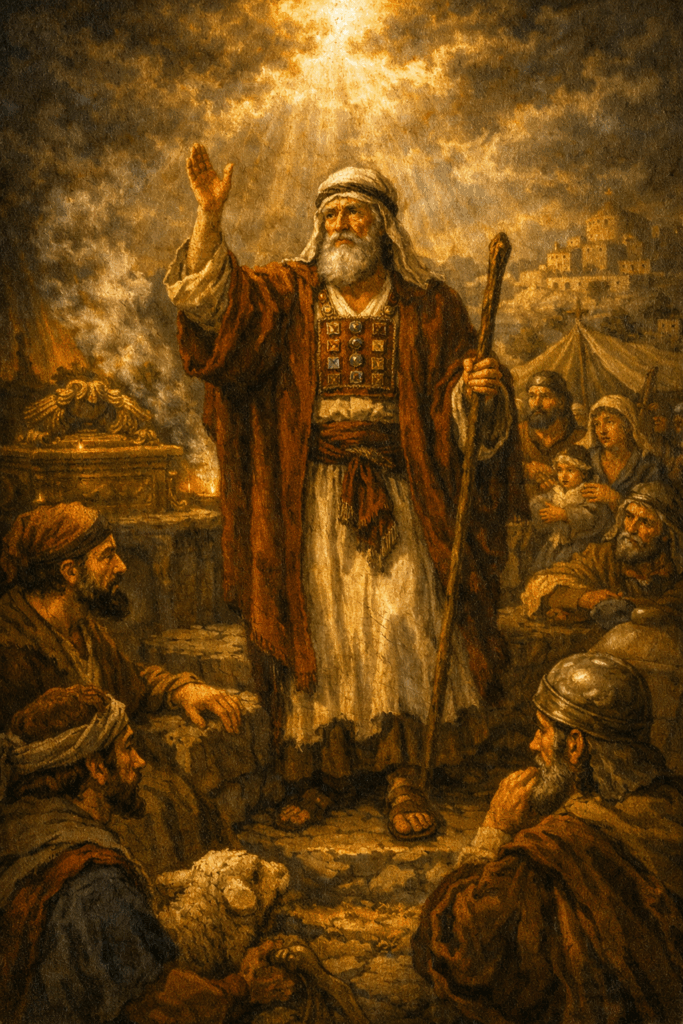
Samuel serves as prophet, priest, and judge, guiding Israel through a time of spiritual renewal and national transition. He leads the people both spiritually and militarily, preparing them for the establishment of monarchy. Under his leadership, Israel rejects the era of judges and asks for a king, marking the dawn of centralized rule.
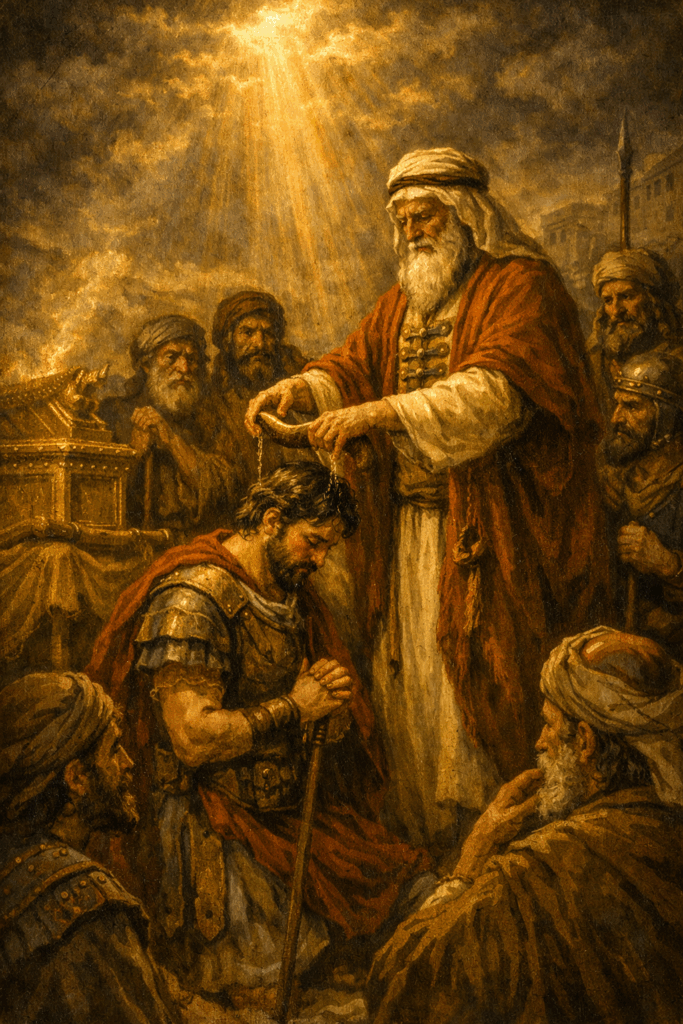
The elders of Israel approach Samuel, asking for a king to rule them “like other nations.” Despite Samuel’s warning that a monarchy will bring burdens and abuses of power, God instructs him to grant their request. Saul, from the tribe of Benjamin, is chosen and anointed as Israel’s first king — marking the end of the judge era and the beginning of royal governance.